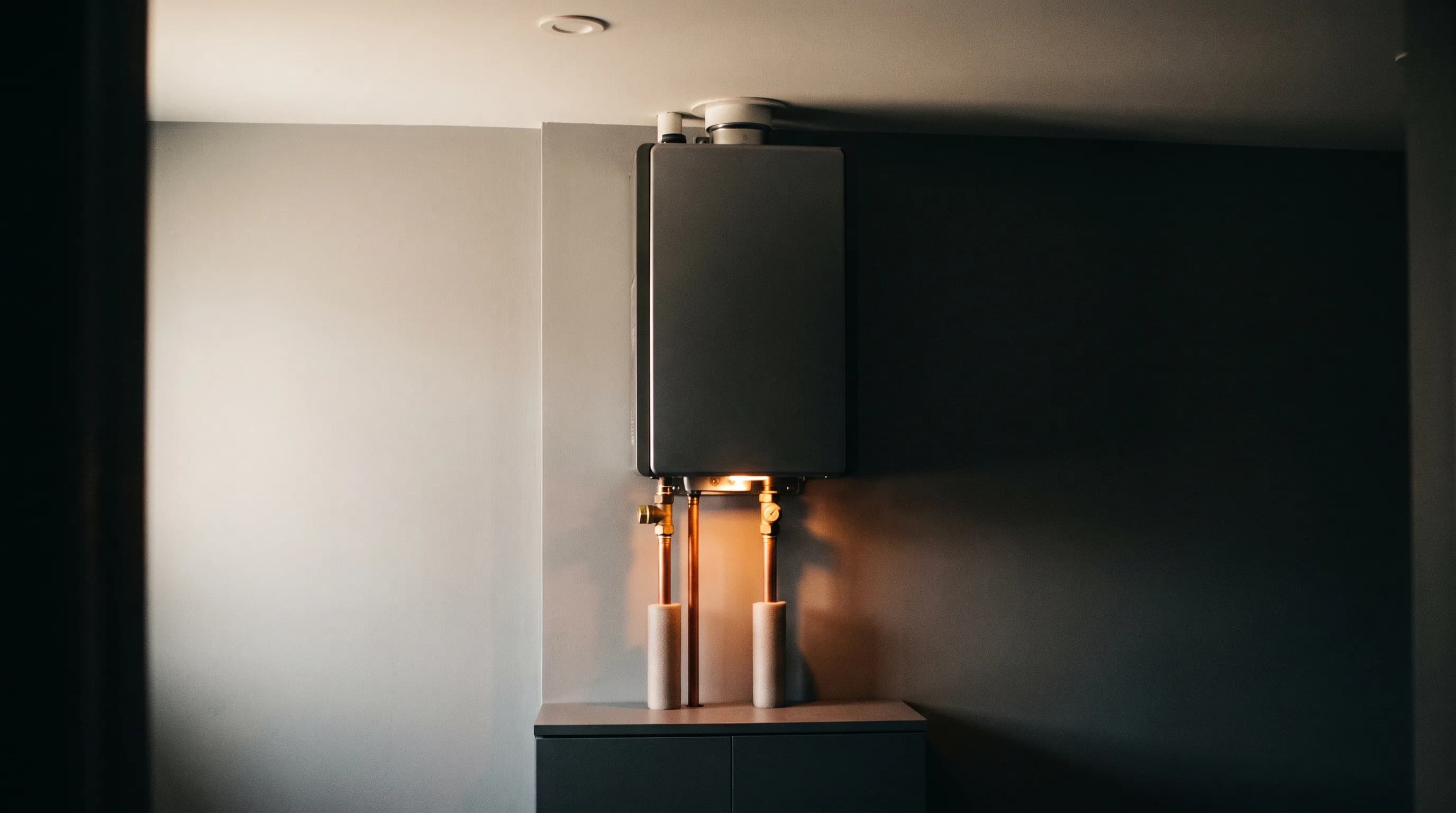
A gas tankless water heater typically runs $4,800 to $11,800 installed on the seacoast, confirmed at your site visit. The equipment itself is only part of that number: the spread is driven almost entirely by what your house needs for gas line and venting work to feed the unit properly. A standard tank swap, by comparison, runs $1,800 to $4,700 installed. Both numbers are real, both systems are good at different jobs, and the honest answer on which one belongs in your basement depends on how your household actually uses hot water. Here is the math without the sales pitch.
What drives the tankless price spread?
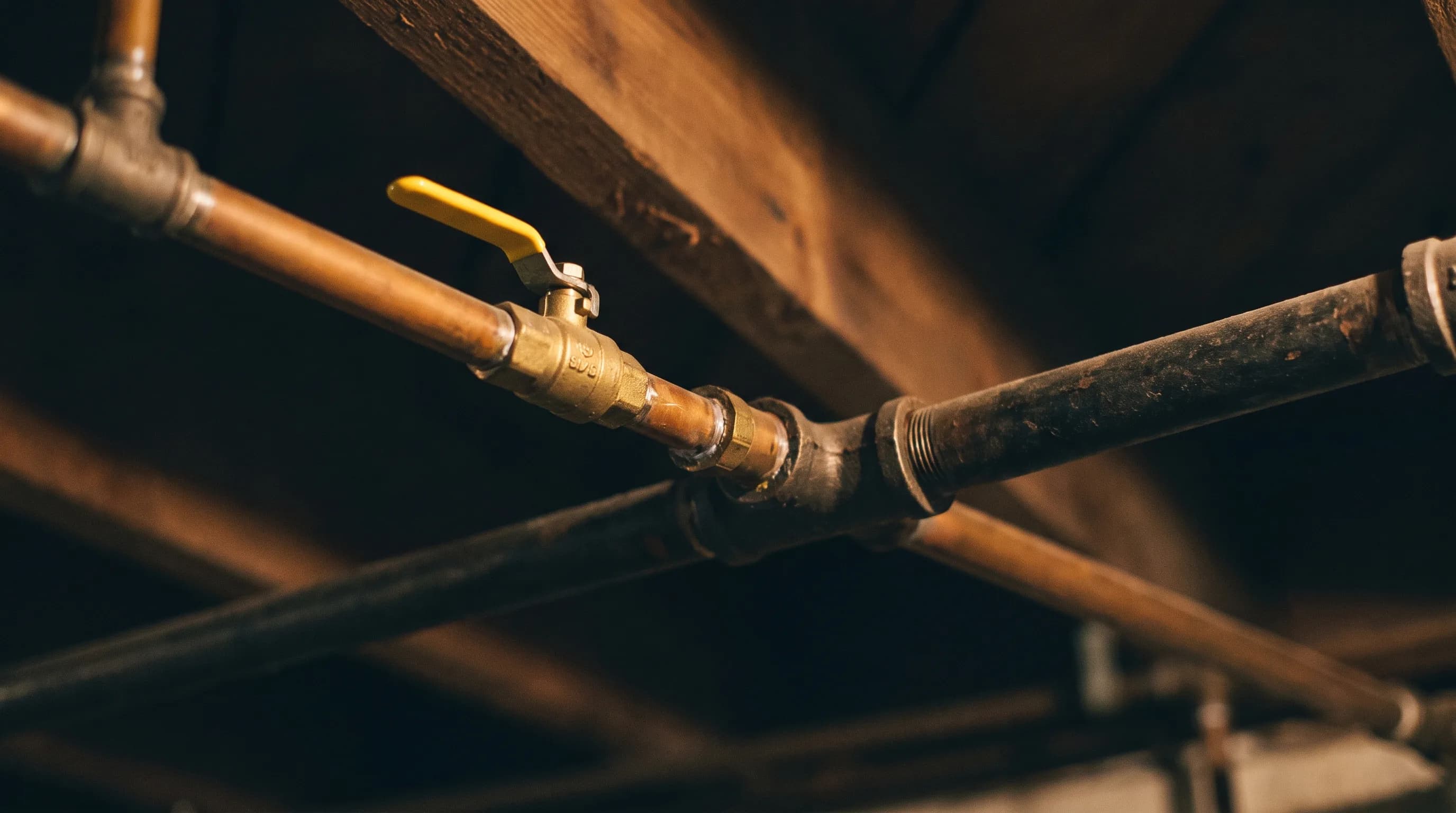
Three things, and none of them are the brand name. First, the gas line: a tankless unit fires at several times the input of the tank it replaces, and many older seacoast homes need the supply line upsized to feed it, which is licensed gas fitting work, not an accessory. Second, venting: condensing tankless units need dedicated venting run to an exterior wall plus a condensate path, and the length and routing of that run is pure labor. Third, location: a unit going where the old tank stood with a short vent run lands near the bottom of the range; a relocation to free up floor space, or a long vent path through finished space, pushes toward the top. When a quote comes in surprisingly low, one of these three usually got skipped, and you find out later.
Tankless or tank: what does the honest comparison look like?
A quality tank swap runs $1,800 to $4,700 installed, typically done in a day, and modern tanks are efficient, simple, and cheap to service. Tankless buys you three real things for its higher price: endless hot water, since it heats on demand instead of storing a finite supply; floor space, since it hangs on the wall; and service life, since tankless units routinely outlast tanks when they are maintained. What it does not buy you is magic. The showers-plus-laundry-plus-dishwasher hour still has a flow limit, sized in gallons per minute, and an undersized unit disappoints exactly like a too-small tank does.
When is tankless worth the jump?
- Your household regularly outruns the tank: back-to-back showers, big soaking tub, teenagers. Endless hot water solves a problem you actually have.
- You are on propane or natural gas already, and the line and venting picture is reasonable, keeping you in the middle of the range instead of the top.
- The mechanical room is tight and wall-hung equipment earns back real floor space.
- You plan to stay in the house long enough for the longer service life to matter.
When is a quality tank the smarter buy?
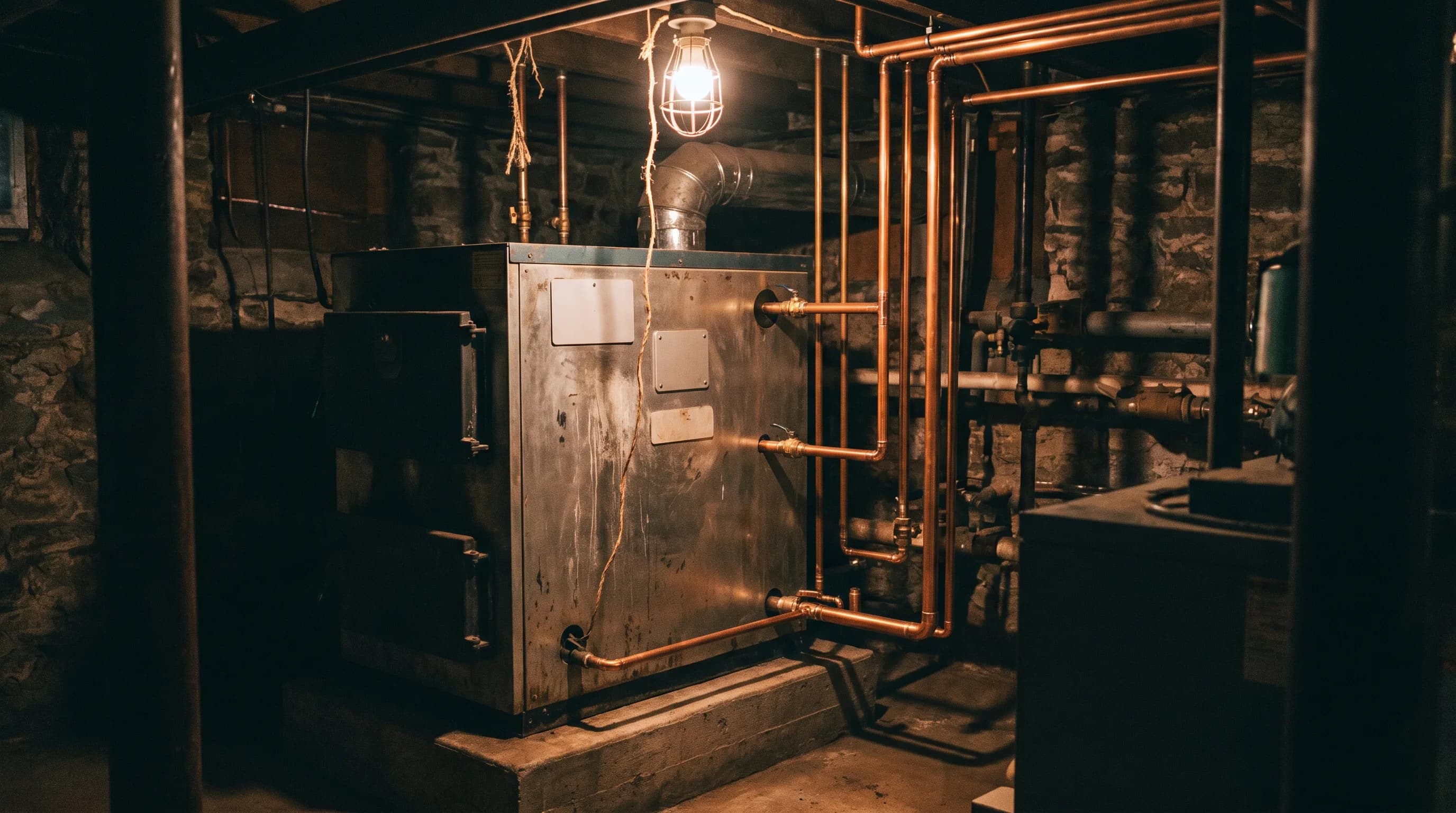
When the tank you have never leaves you short, a like-for-like swap at $1,800 to $4,700 is simply the better use of money, and we say so even though the other quote is bigger. Same verdict when the gas line and venting work would push a tankless install toward the top of its range for a household of two that showers in sequence. And if your water heater is limping in a house with a boiler that is also near the end, say so at the estimate: a boiler swap with an indirect water heater can solve both problems with one piece of equipment, and it changes the math entirely. The point of publishing ranges is that you get to see these tradeoffs before anyone is standing in your kitchen. Our water heater page carries the equipment lines we install: Navien, Rinnai, Lochinvar, and commercial Rheem.
Are there rebates on water heaters in 2026?
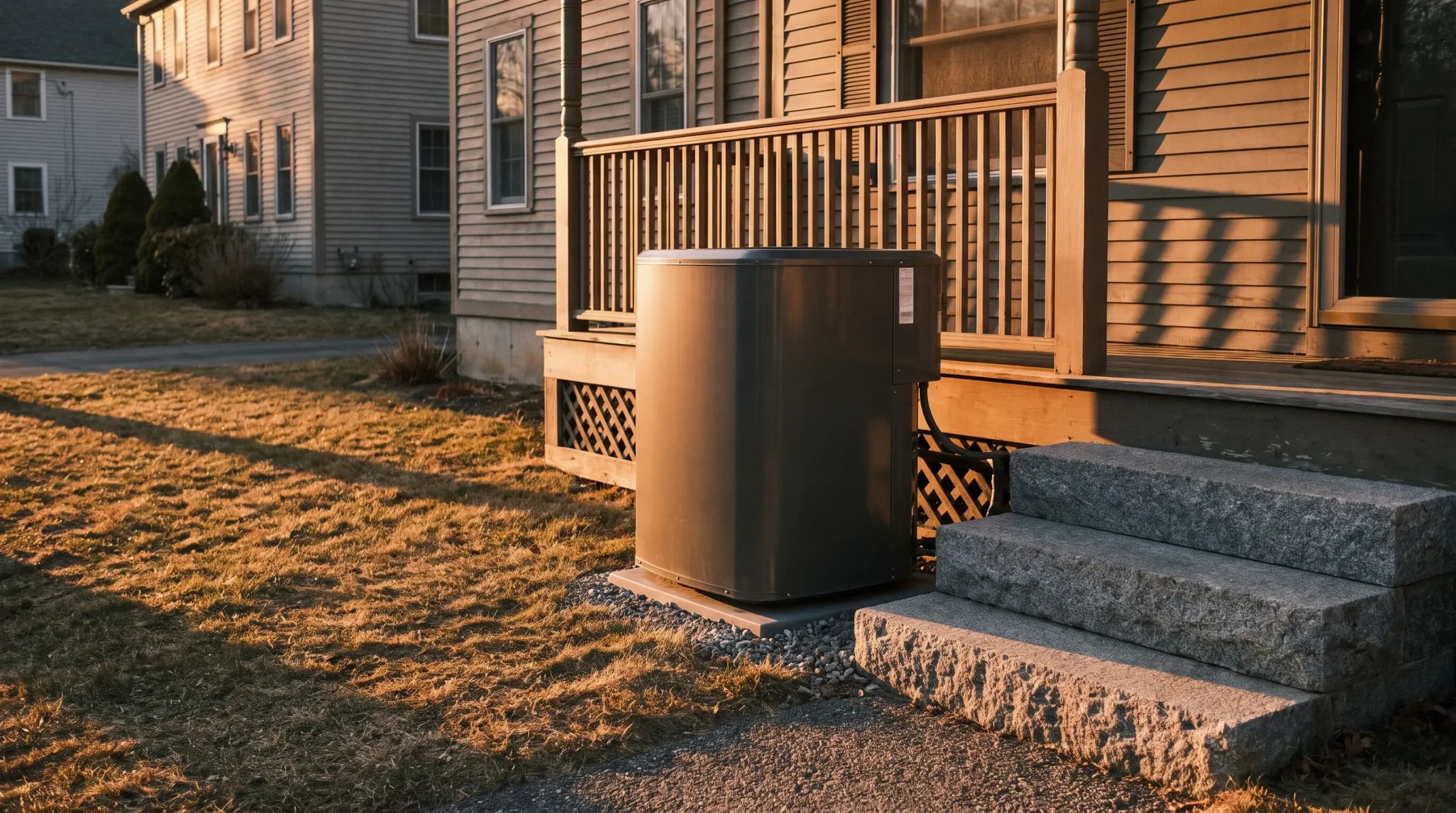
The short answer: not much for gas units. The federal 25C credit that once returned a few hundred dollars on qualifying equipment died for anything placed in service after December 31, 2025; the full story is in our 2026 rebate guide. The rebate money that exists targets heat pump water heaters: NHSaves pays $900 on qualifying models, and income-qualified NH HEAR reaches up to $1,750, verified July 2026. A heat pump water heater is a different machine with different tradeoffs, and where it fits, we quote it beside the others. Three options, three real numbers, starting with 90 seconds online.