Some frost on a heat pump in winter is normal, and the unit removes it by itself with automatic defrost cycles. What is not normal: the outdoor unit encased in solid ice, ice returning within hours of every defrost, water freezing under the unit into a growing slab, or a unit buried in snow and still trying to run. The first list is physics doing its job. The second list is a problem, and more often than people expect, it is an install problem rather than an equipment problem. You can tell the difference yourself, and the checks below come before any service call.
Why do heat pumps frost up in the first place?
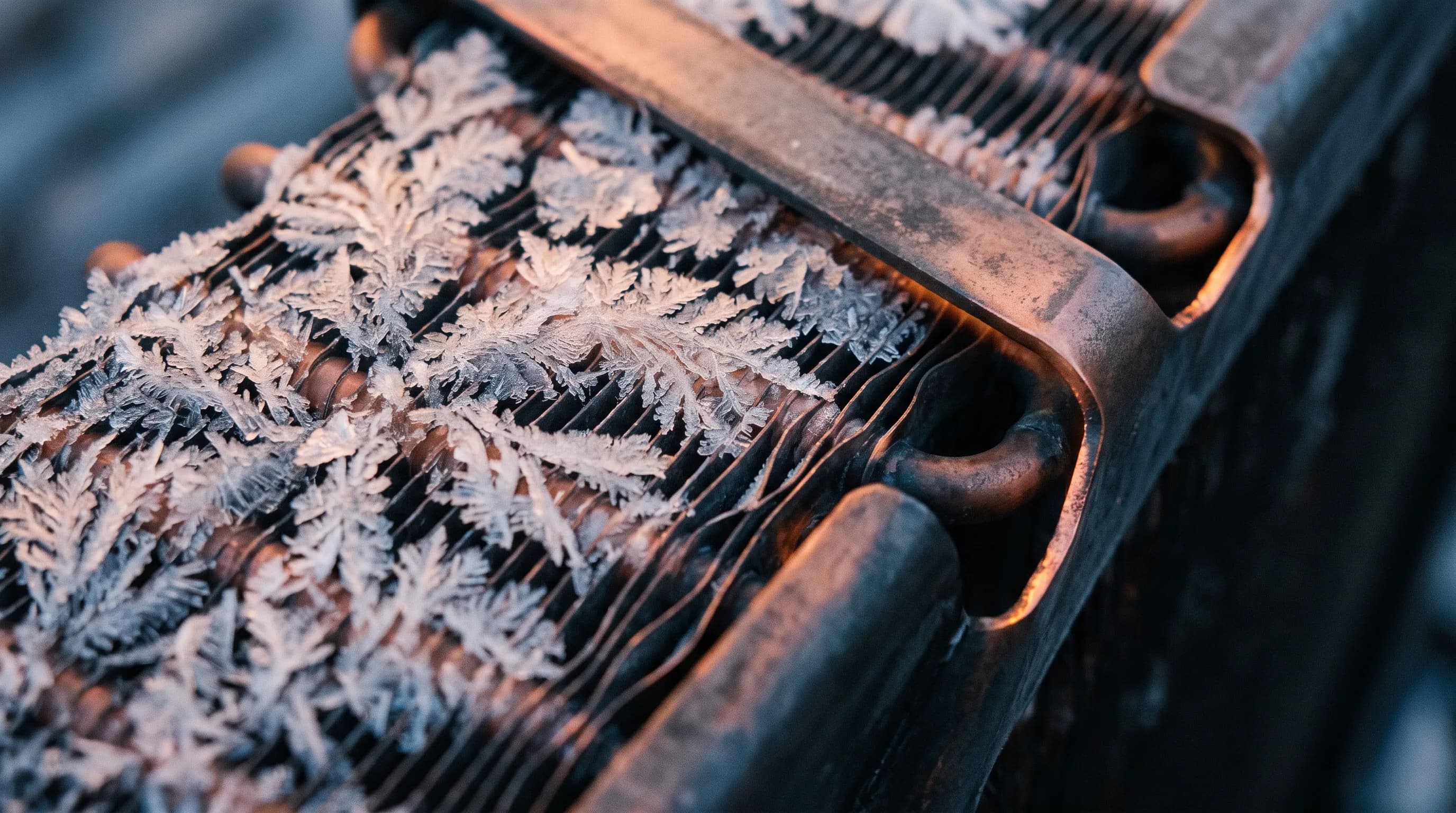
Because the outdoor coil runs colder than the winter air around it. Pulling heat out of cold air means the coil surface drops below the air's dew point, and moisture in the air freezes onto it, the same way a cold beer sweats in July. The colder and damper the air, the faster frost forms, which is why seacoast humidity produces more frost than the same temperature inland. Every cold-climate heat pump is designed around this. Frost is not a malfunction; unmanaged ice is.
What is a defrost cycle, and what does normal look like?
Periodically the unit reverses itself for a few minutes, warms the outdoor coil, melts the frost, and switches back to heating. During a defrost you may see steam rising off the unit, hear a whoosh or a change in fan behavior, and feel indoor heating pause briefly. All normal. Normal, in one list: a coating of white frost on the coil that comes and goes, steam during defrost, water dripping under the unit afterward, and the occasional groan as it changes modes. If that describes your unit, it is working, and the background on how these systems handle real winters is in Does a Heat Pump Work in NH Winters?.
What can you safely check yourself?
- Snow. Clear it from around, on top of, and especially downwind of the unit. A unit needs free airflow on all sides, and drifting snow is the single most common cause of winter trouble.
- The base. Defrost water has to drain away. If meltwater is refreezing into a slab under the unit and climbing toward the coil, clear it and watch whether it rebuilds.
- Indoor filters and heads. Starved indoor airflow stresses the whole system. Clean filters are the cheapest maintenance in HVAC.
- Gutters and rooflines above the unit. Dripping water that freezes onto a condenser builds exactly the kind of ice defrost cannot remove.
- After a storm: gently clear what brushes off. Never chip, pry, or pour hot water on a coil; fins bend and refrigerant lines are not built for impact.
When is icing an install problem?
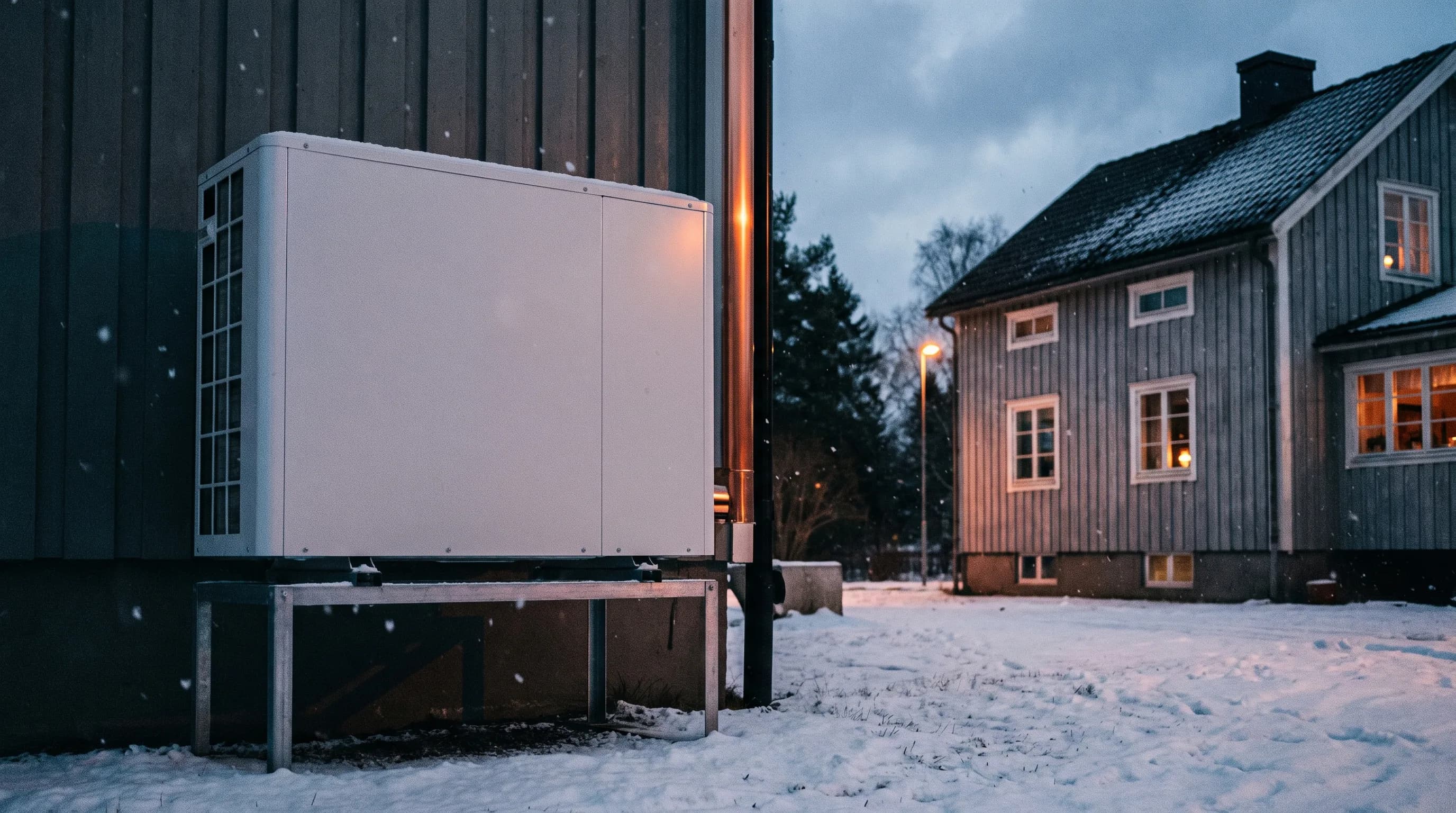
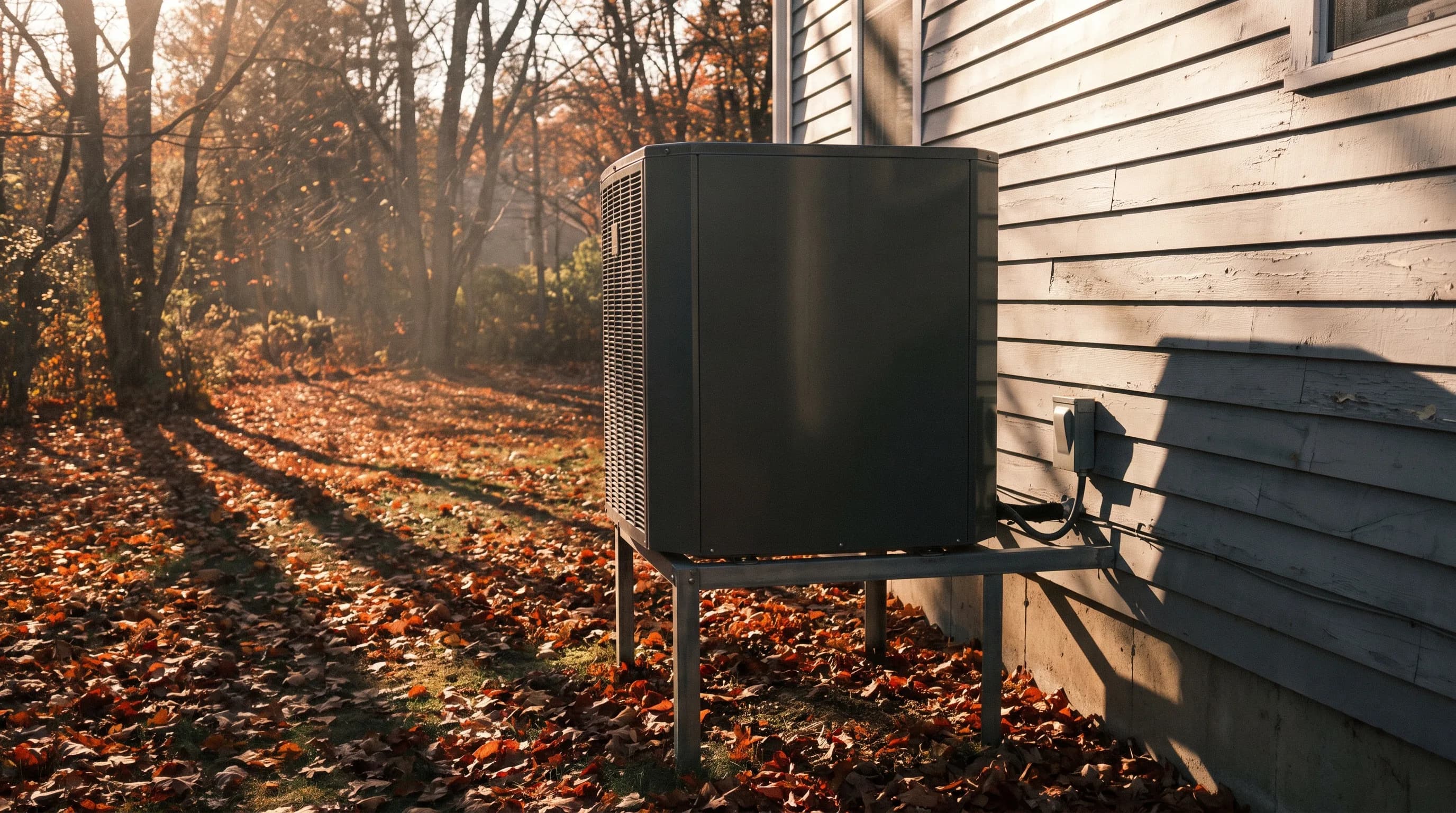
When the unit was set up to fail its own defrost system. Ground-level mounting with no stand puts the coil at snowdrift height and lets defrost water pool and refreeze right at the base; on the seacoast the unit belongs on a riser above the snow line. Placement on the wrong wall takes wind-driven snow and coastal spray straight into the coil. Poor drainage pitch keeps meltwater where it can refreeze. And chronic icing paired with short, frantic run cycles points at sizing problems, the expensive mistake we cover in What Size Mini Split Do I Need?. If your unit has iced repeatedly since its first winter, the install deserves a hard look before anyone sells you parts.
When should you call for service?
Call when ice persists or returns after you have cleared snow and drainage: solid ice through a defrost cycle, ice rebuilding within hours, heating output falling off, or the unit tripping out on repeated cycles. Those symptoms point at a failing defrost sensor or board, a refrigerant issue, or the install faults above, none of which are homeowner fixes. A heat pump crew diagnoses it in one visit, and if what you need is a second opinion on someone else's install, we do that without drama. Straightest path is booking the visit; we run the whole seacoast side of New Hampshire.