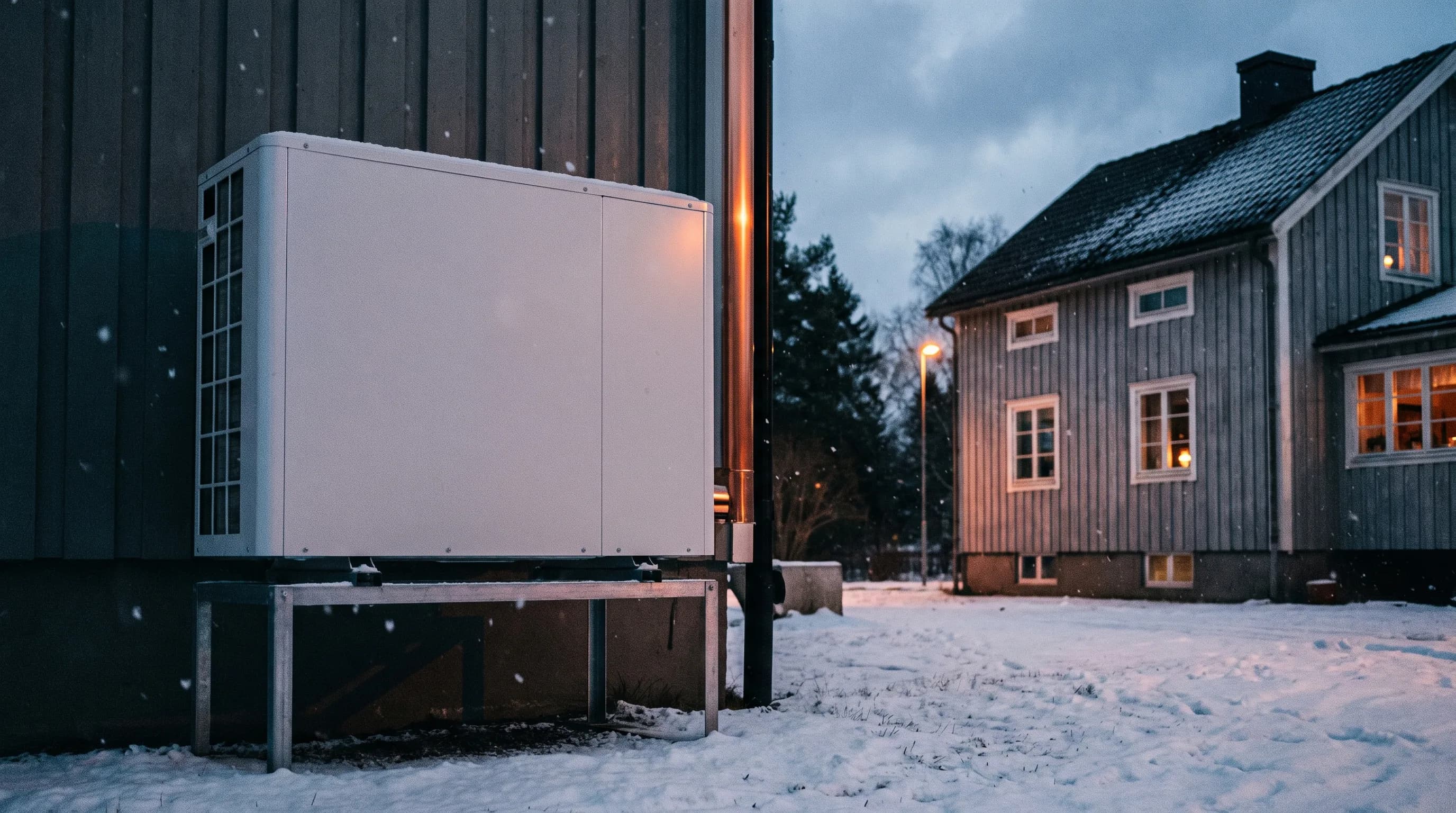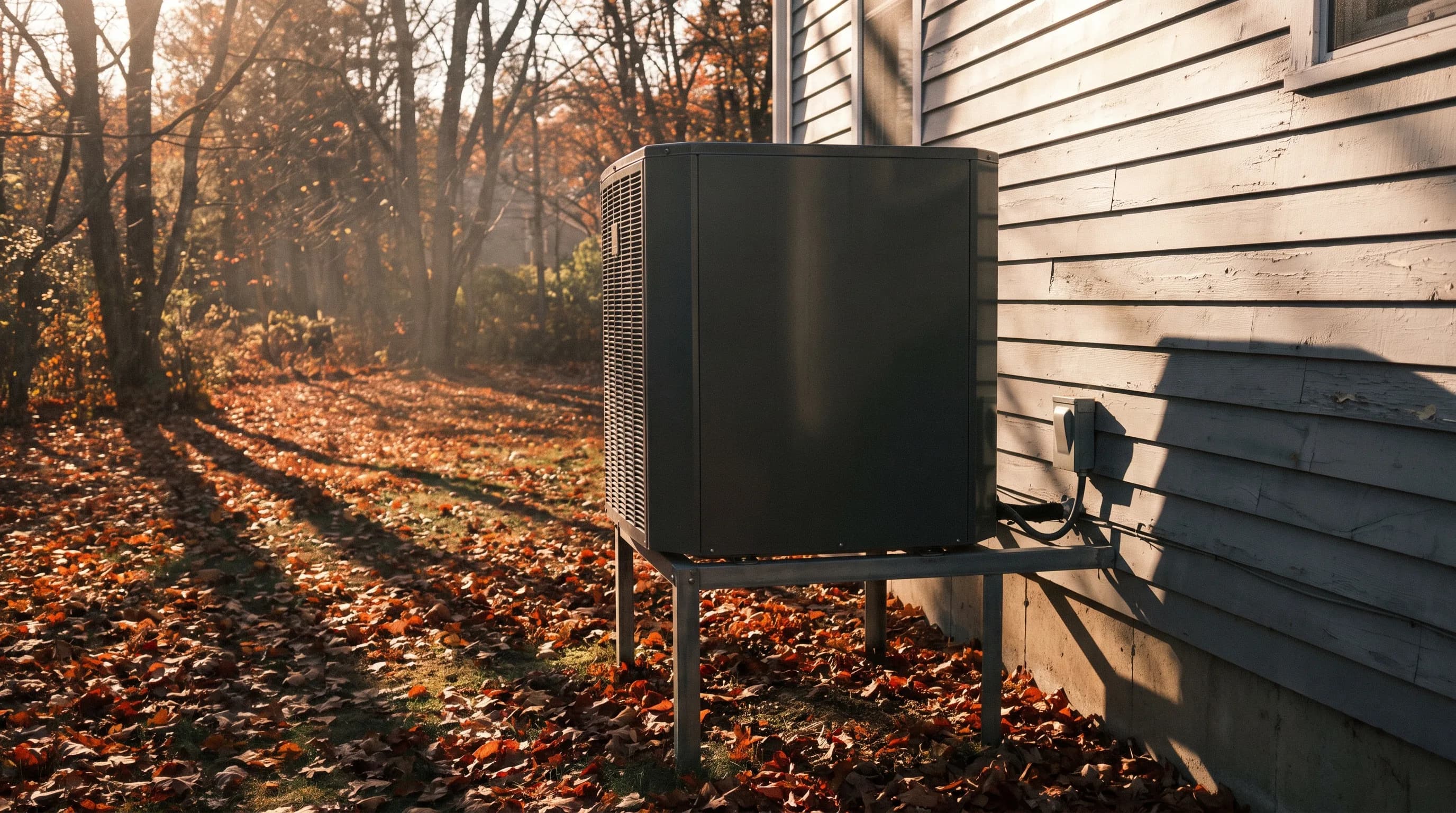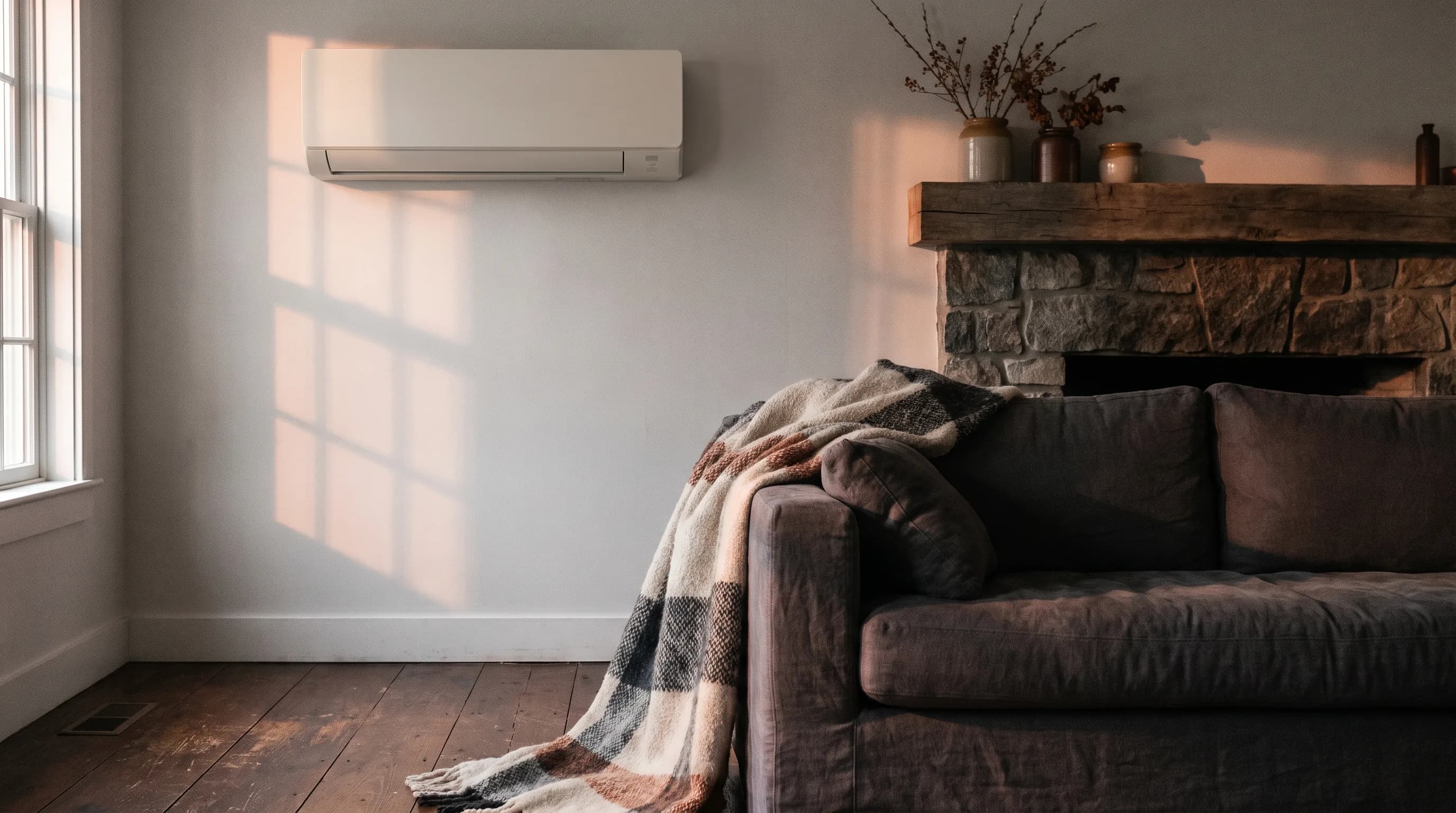
Not the size the national BTU chart says. Those square-footage charts were written for average American climates, and New Hampshire is not one. The right size for a NH mini split comes from your home's measured heat loss on a cold design day: insulation, air leakage, windows, and layout, the calculation the trade calls Manual J. Get it right and the system is quiet, efficient, and comfortable at 10 below. Get it wrong in either direction and you pay for it every month, and oversizing, not undersizing, is the expensive mistake almost everyone makes.
Why do national BTU charts get New Hampshire homes wrong?
Because square footage is the least important number in the equation. A chart that says a certain BTU rating per room assumes an average climate, average insulation, and average windows. A 1990s colonial in Hampstead with decent insulation and a 1920s farmhouse in Dover with original windows can have identical floor plans and wildly different heat loss. New Hampshire's design temperatures sit far below the national assumption, and cold-climate equipment output changes with outdoor temperature, so the sizing question is two curves: what your house loses on the design day, and what the unit still produces at that temperature. We covered the output side in Does a Heat Pump Work in NH Winters?.
What determines the right size?
Heat loss, measured room by room. A real sizing visit looks at the things the chart ignores:
- Insulation levels in the attic, walls, and basement, the biggest lever in older NH stock.
- Air sealing, because a leaky house loses heat no equipment can outrun economically.
- Window area, age, and orientation.
- Layout: open floor plans share air with one head, chopped-up floor plans do not.
- The design temperature for your town, not a national average.
This is also where weatherization first pays: tightening the envelope before sizing sometimes drops you a full equipment size, which is money off the install and every bill after it.
What does oversizing actually cost you?
An oversized mini split short cycles: it blasts to temperature, shuts down, and restarts over and over instead of settling into the long, low, efficient runs the technology is built for. Short cycling burns efficiency, wears components, leaves rooms alternately stuffy and cool, and in summer it dehumidifies poorly because the coil never runs long enough to wring the air out. You also simply paid for capacity you never use. Oversizing is the most expensive mistake in the category, and it is usually sold as generosity: the bigger unit sounds like a safer bet, and it costs more, so nobody talks you out of it. An undersized system shows up on the first cold night; an oversized one hides in your bills for fifteen years.
How many zones do you need?
Fewer than the brochure suggests, usually. Every zone adds cost, and a head in every bedroom is rarely the right answer in a house with decent air movement. The configurations we quote most: one well-placed single zone for an open main floor, with the existing heat covering bedrooms; a two or three zone system for a full-house solution in a chopped-up layout; and ducted or dual fuel setups where the house already has distribution worth using. Typical seacoast range, confirmed at your site visit: $4,400 to $11,400 installed for a single zone, $12,000 to $24,000 for multi-zone systems. Details on equipment and configurations live on the heat pump and mini split page.
What does a proper NH sizing visit look like?
Someone measures. Rooms, windows, insulation, the electrical panel, and where the line sets can actually run. You get asked about cold rooms, oil usage, and how you live in the house. Then the quote shows the load number, the equipment's rated output at design temperature, and the price, with rebates as their own line. Sizing also touches the rebate math, since programs pay per ton, and the 2026 rebate rules are their own subject: the short version is that NHSaves pays $250 per ton up to about $1,250 on qualifying systems, and the federal tax credit is gone, which we break down in the 2026 rebate guide. If a quote arrives from someone who never measured anything, it is not a quote, it is a guess with a signature line. Ours starts with 90 seconds online and gets confirmed by a crew that measures.